Showing posts with label Austria. Show all posts

15 November 2021

Christmas 2021


New Christmas 2021 stamps


Date of Issue : 12 November 2021
Slovakia

Christmas Mail to Baby Jesus is a unique project organised by the Slovak Post in collaboration with its partners and a major part of the most wonderful festivities of the year.


Austria


Date of issue : 12 November 2021


The rocking horse - the nostalgic toy as a motif for a commemorative Christmas stamp

This vintage stamp shows a drawing of a rocking horse, a Christmas ball and a gift. In red letters it wishes „Merry Christmas“.

The rocking horse stands as a symbol of toys that have lasted for generations. Already in ancient times, small horses on wheels were used for trailing or mounting. The current runners have been known since about the 17th century. It is believed that they were invented in the USA and came to Europe in the 19th century. Even then, the rocking horse was on many a wish list, but not all children could get one - that's why the rocking horse is also symbolic of unfulfilled dreams.

Traditionally, they are made of wood, but they are also available with plush fur - or not as a horse at all, but as a completely different animal. Even today, they are the ideal toy for children. Not only does a rocking horse stimulate the imagination, it also promotes motor development and trains the sense of balance. And even if it is not a present under the tree this year, the rocking horse will certainly find its way into Christmas rooms as a decorative tree ornament or as a gingerbread motif.

Netherlands


Date of Issue : 15 November 2021


The following winter scenes are depicted on the December stamps 2021 in the form of papercuts: A mole with candy cane and rucksack, 2 love-struck blue tits under a mistletoe, a fox with a fluttering scarf and envelope, a mouse in a red postal car, a badger decorating the Christmas tree with his scarf, 2 mice decorating a peacock, a squirrel pushing a sleigh with gifts and treats, a squirrel, hare, dog and owl by the skating pond, a hare with a bunch of Christmas roses, and a fallow deer decorated as a Christmas tree.

All the animals are depicted in a friendly winter landscape, a cosy animal forest with brightly coloured picture elements. Sometimes a larger scene can be seen, other times all the attention goes to one animal. There are three types of sky: light blue, bright blue and dark blue for the morning, afternoon and night respectively. Each December stamp tells its own story. Together, the ten December stamps form a whole because the animals are all, in one way or another, engaged in the theme of Christmas, winter or December.

Liechtenstein


Date of Issue : 15 November 2021


The traditional and popular Christmas stamps are presented in oriental style this year, which is reflected in the choice of colours and detailing in gold.

On the stamp "The Guiding Star" (face value: CHF 0.85), the star that pointed the way to Bethlehem for the Three Wise Men takes centre stage. "The Shepherd" (face value: CHF 1.00), symbolically represented by a sheep, refers to the shepherds who, after an angel proclaimed the birth of Jesus, also set out to see the Son of God lying in a manger.

The "Holy Spirit" (face value: CHF 1.50), who had come upon Mary as the Spirit of God and made her conceive her son nine months earlier, appears in the form of a dove like in the Bible. A candle flanked by a plant represents "The Gifts" (face value: CHF 2.00), which the Wise Men from the East offered to the Saviour.

New Zealand


Christmas 2021
Date of Issue : 3 November 2021


USA


 The visit of St. Nicholas on Christmas Eve 


Date of Issue : 10 October 2021


19 July 2021

Postcrossing 2021


Postcards from all over the world with "Postcrossing”


Date of Issue: 14 July 2021


The internet platform Postcrossing connects people worldwide through postcards. The design, created by Theresa Radlingmaier, shows stylized postcards and the happy faces of those who receive them.

Portuguese Paulo Magalhães founded "Postcrossing" in 2015 with the aim of connecting people worldwide through postcards. Anyone who registers on the online platform is sent a random address of another member. People then send a postcard to this address. As soon as the other member has received the postcard and entered it in the system, you can receive postcards yourself. The more postcards you send, the more you can receive.

In Austria, thousands of people are also already registered on Postcrossing, and worldwide over 800,000 people from more than 200 countries use the platform. By May 2021, a total of over 60 million postcards had been sent and so the plan to motivate people to write postcards and connect them in this way has worked out.

Club News

News from Philatelic Society


NEW COMMITTEE OF CENTRAL INDIA PHILATELIC SOCIETY ELECTED


47 years old Central India Philatelic Society elected its new working committee. In a general meeting held on 11th July 2021 at Usha Palace, Satna (M.P.), the following office bearers were elected unanimously –

President: Mr. Sudhir Jain
Vice President: Mr. Uma Shankar Agarwal
Secretary: Mr. Rajendra Agrawal “Shashi”
Joint Secretary: Mr. Pankaj Pratap Singh
Treasurer: Mr. Manmohan Maheshwari
Joint Treasurer: Mr. Sachin Tolwani
P.R.O.: Mr. Ravi Prakash Gupta


Exhibition Convener:     Dr. Himanshu Agarwal
Working Committee: Mr. Ashok Kumar Jain, Mr. Praveen Kumar Khatri,
        Mr. Jinendra Kumar Jain, Mr. Surendra Kumar Gupta,
        Mr. Udit Tiwari, Mr. Vinay Gupta.
        Mr. Ashok Mahule, Mr. Azam Siddique

In this meeting, members decided to publish a book covering all the newspapers issued in Satna District since the beginning. Mr. Sudhir Jain displayed a collection of Permanent Pictorial Cancellations, Mr. Ravi Prakash Gupta displayed a collection of unusual special covers like silk covers etc. Mr. Pankaj Pratap Singh and Mr. Sachin Tolwani displayed Pre & Post Independence one Rupee coins. Mr. Ashok Kumar Mohale exhibited “Gandhi Chavanni (Quarter Rupee)” which was minted in Satna in the year 1942 for collecting funds for the independence movement.

It is worth to mention that the Central India Philatelic Society was established in the year 1974 and organized many National level, State level, and local Philatelic exhibitions at various places like Satna, Rewa, Bhilai, Korba, Khajuraho etc. Society arranged to issue 21 special covers and published 12 souvenirs.

Meeting concluded with condolence to senior member Mr. Kuldeepak Oberai and Mrs. Usha Jain wife of founder member Mr. Ashok Kumar Jain.

- Sudhir Jain : Satna (MP)

28 October 2020

New Corona Stamp on Toilet Paper by Austria Post


Austria postal service prints coronavirus-themed stamp on toilet paper. The stamp was inspired by the panic-buying of toilet paper when COVID-19 first hit Europe in the spring. It shows a baby elephant, a symbol which has encouraged citizens to keep their distance during the pandemic.The stamp shows a drawing of a baby elephant to indicate the 1-meter physical distancing advice used in Austria

The national delivery service said it got the idea for the three-layered stamp when hygienic products, in particular toilet paper, became a symbol for panic-buying. The splurges were sparked by lockdowns implemented to curb infections as the pandemic took hold across Europe earlier this year.

However, it took several months to turn the vision into reality due to a lack of material."Domestic toilet paper was sold out for a long time and difficult to get in the required quantities," the state-controlled mail service said in a statement, reported by news agency dpa.


Courtesy - Photograph: Leonhard Föger/Reuters


Keep your distance

The stamp shows an image of a baby elephant, which has been used in Austria to symbolize the 1-meter (3.2 feet) physical distancing advice used in the European country to avoid the spread of the novel virus.

The novelty doesn't end there, though. The stamp has the unusual value of €2.75 plus a surcharge of €2.75 ($3.25), as the mail service donates half of the price to help those who have been severely affected by the pandemic.


07 October 2020

New stamps from Austria


250th Birth Anniversary of Beethoven


Date of Issue : 30 September 2020

Austria is famous for its beautiful architecture but music and wine from Austria are also very popular around the world. Two beautiful stamps from Austria featuring great German Composer, Beethoven who later moved to Vienna and famous wine-producing region of Austria, Burgenland.

The musical genius

Austrian Post is celebrating the 250'h anniversary of the birth of the great composer by issuing a commemorative stamp, embellished with foil embossing, which shows the famous portrait by Joseph Carl Stieler.

Beethoven was born in 1770 in Bonn. His musical talents were encouraged from an early age, and even as a child he was already giving piano recitals. In 1792 he moved to Vienna, where he found support among the nobility. Among other things, he took lessons in composition from Joseph Haydn and quickly distinguished himself as a successful composer. However, his health soon began to deteriorate and a serious hearing impairment ultimately resulted in almost complete deafness. Despite this tragedy he continued to work tirelessly and with a high level of perfectionism on his compositions until shortly before his demise on 26th March 1827. With many of the public turning out to mourn him, Beethoven was initially buried in Wahring cemetery, but was subsequently laid to rest in a grave of honour in Vienna’s Central Cemetery in 1888.

Ludwig van Beethoven was a key proponent of Viennese Classicism and a forerunner of the Romantic era. He left behind an exceptionally comprehensive oeuvre that includes not only his nine famous symphonies but also numerous piano concertos and sonatas, string quartets, songs, the opera Fidelio and his Lissa solemnis. One of his most famous works is undoubtedly his ninth symphony, in the last movement of which a choir sings Friedrich Schiller’s poem “Ode to Joy”. An instrumental version of this is today used as the official European anthem.


“Austrian wine regions”
 

Date of Issue : 19 September 2020

South Burgenland – Uhudler

From a tradition to a cult drink

A particular speciality from the South Burgenland region is the incomparable Uhudler, which is the subject of this year’s special stamp from the “Austrian wine regions”series.

Uhudler has the phylloxa aphid to thank for its existence after the latter almost wiped out European grapevines at the end of the 1 t h century. As a result, robust, phylloxa-resistant

varieties from America were imported to replace them, eventually being hybridised during the 20th century through grafting with indigenous varieties. The unmodified varieties are known as direct producers, and it is from these that Uhudler is made.

A fruity wine, Uhudler impresses with its unmistakable aroma of wild strawberries and raspberries. Depending upon the variety and region, its colour ranges from pale yellow through delicate pink to brick red; the flavour is dry with a pronounced acidity, and is described as “foxy”. Legend has it that the wine got its name from the wives of the vintners, whose husbands, after having partaken copiously of the wine, allegedly looked like eagle owls (German: Uhu). Uhudler was banned for a time as it was falsely claimed that it was injurious to the health. In 1992 it was finally incorporated into the Austrian Wine Law. Only certain direct producer varieties are authorised for making Uhudler, and only certified wines from particular municipalities in South Burgenland are allowed to bear the protected name. The special stamp shows the historic castle in Güssing, one of the municipalities  which produces the wine.

Club News

New special Cover from Dehradun

Mahatma Khushi Ram Public Library, Dehradun : 5 October 2020


Image Credit : Sreejesh Krishnan, Dehradun  (Philately Promoters Whatsapp Gp)

Philatelic Exhibition at Indore


On 2nd October a 12 frame philatelic exhibition was inaugurated at GPO Indore. It was organized by Malwa Philatelic society and displayed exhibits of Sri O.P.Kedia, Sri Arun Bindal, and Sri Rishiraj Upadhaya. A special cover was also released on that day. The exhibition will continue for seven days .

-O.P.Kedia-Secretary Malwa Philatelic Society


28 February 2020

RED NOSES : Clowndoctors


Red Noses


Date of issue : 25 February 2020


Here is a beautiful stamp issued by Austria Post on 25 February 2020 featuring 'Red Noses', the Clown doctors who make people laugh even when times are difficult ! It is world’s largest association of healthcare clowns.


Making people laugh even when times are difficult

For over 25 years now the RED NOSES clown doctors have been bringing laughter where it is most needed and Austrian Post has honoured this fabulous commitment with a RED NOSES special stamp.

“RED NOSES is an artistic organisation bringing humour and laughter to people in need of joy”, says the mission statement of this charitable organisation. The clown doctors visit children and young people in hospitals and in other special educational and therapeutic institutions as well as adults and senior citizens in care and rehabilitation centres. They provide psychological support to help people get well again and find renewed pleasure in life.

The RED NOSES clown doctors are professional artists who have undergone special training. When they are ill, children are subject to all kind of stresses: anxiety, pain, separation from their parents, treatments – and a nosy, clumsy clown can become an important ally who has the sensitivity necessary not only to ensure that there is fun to be had, but also to distract patients and to help reduce anxiety levels.

Adults also benefit from the healthcare clowns: clowns improve their mood, motivate people and provide a few lighter moments in an otherwise difficult situation. For senior citizens, visits from clowns provide variety and help raise their spirits.

RED NOSES Clown doctors

Founded by Monika Culen and Giora Seeliger in 1994, after the first visits from clowndoctors to sick children it quickly became clear what positive effects these special “visits”can have. Since 2000 the clown doctors have also been visiting senior citizens in care facilities, and projects such as “Clowns Unterwegs” (“Clowns on the Go”), supporting people through therapy in rehabilitation clinics, a circus workshop for long-term paediatric patients or the clown theatre for children and young people with mental and multiple disabilities followed. Since 2013 the RED NOSES have been working in crisis and catastrophe zones with “Emergency Smile”. RED NOSES Clown doctors International was set up in 2003 and today has partner organisations in ten different countries. This makes the RED NOSES group the world’s largest association of healthcare clowns.


21 June 2019

Crypto Stamp


Date of Issue : 11 June 2019


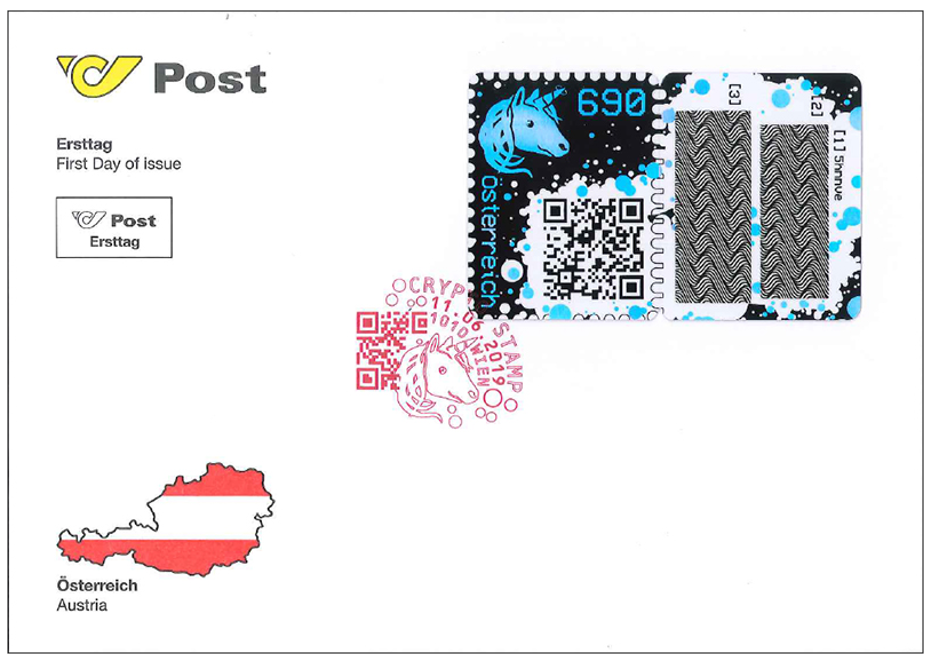
Here is an extraordinary stamp issued by Austria Post "Crypto Stamp" using the latest software technology ' Ethereum blockchain'. A collectible item for stamp collectors. It is definitely a unique item issued for the first time in the world by Austria Post. 

According to the press release, the so-dubbed “crypto stamp” is the first stamp in the world to be authenticated via blockchain technology. The postal service has reportedly issued 150,000 copies sold at € 6.90 apiece.

When purchased, the stamp set comes in two parts. As pictured below, the left part, which is stylized with a unicorn associated with Ethereum, functions as a standard stamp that can be used to send mail. The right section, on the other hand, contains the credentials used to authenticate the crypto collectible via blockchain.


Austria Post launches Crypto Stamp


Stamps go Digital

With the innovative crypto stamp, Austrian Post is for the first time offering a stamp which also exists as a digital asset (crypto collectible) in the Ethereum blockchain, and is thus breaking completely new ground.


The blockchain is a special form of decentralised immutable data storage. For this, data are not stored in a single computer centre but are distributed across many independent computers. A sophisticated mechanism ensures that completed transactions cannot be subsequently manipulated. Using the QR code printed on the stamp, the owner can look at the digital version of his/her crypto stamp in the Ethereum blockchain and then transfer it to other users.


The Crypto Stamp

The crypto stamp on the one hand comprises the physical stamp which you can remove from the mini sheet along the perforated line and use for postage like any “normal” stamp. The second part of the sheet contains (in addition to the stamp), concealed under a scratch-off layer, access data (address and private key) to a so-called wallet, a “virtual wallet”. This contains the associated digital crypto stamp. In the Ethereum blockchain everybody can see which wallet address the digital crypto stamp is assigned to. However, the identity of the owner of this wallet address is not visible.


Only the owner of the private key belonging to the wallet can access the crypto stamp. On the mini sheet this code is given in the form of a “secret word list” which is revealed after scratching off the coating on the third section. This code enables the owner to access the pre-configured wallet address and also to transfer the stamp to other wallets. Every transfer of ownership is irreversibly documented in the blockchain so that legal ownership can always be proven.

The unicorn depicted on the stamp block has a symbolic meaning: successful start-up companies valued at at least one billion US dollars are referred to as unicorns in the world of business as they are just as rare as these mythical creatures. The unicorn is also the heraldic animal used to represent the Ethereum community.


How Blockchain Will Invade Everyday Life


Austria’s crypto stamp is but a first glimpse at the future of digital property. The use case is relatively novel compared to the types of things you can do with your blockchain wallet in the future. One day it will be possible to prove ownership of a car or a right to a rental of any kind. Or perhaps the most common use will be paying tolls and transit fares.


The possibilities are endless. But the blockchain wouldn’t be nearly as interesting if it were merely one more paper-generating layer on the gears of our commerce system. Instead, blockchain offers the ability for people to retain permanent receipts. The need for multiple wallets will make itself evident when people are shuffling thousands of on-chain tokens instead of papers. The upside is clear: you’ll never lose your birth certificate again.


13 September 2017

Oak tree Stamp made from real oak wood


Date of Issue : 28 July 2017


Oak Tree

On the occasion of the 20th anniversary of the Austrian Federal Forestry Office, which was taken out of the national budget and re-established as a joint stock company in 1997, Austrian Post has come up with something very unusual for a stamp: a stamp in the shape of an oak tree made from real oak wood.

Oaks (lat. Quercus) are easily recognised even by lay persons thanks to their characteristic lobed leaves and their fruits. In Austria the main native varieties are the common oak and the sessile oak. In the eastern regions of our country, oaks are widespread and play an important economic role. They can reach a height of up to 40 metres and live to an age of around 1,000 years.

The wood of the oak is one of the most valuable native woods for use as a veneer. Oak is also used for parquet flooring, doors, window frames, steps and furniture. It is also particularly important for the production of wooden barrels for high-quality barrique aged wines. Acorns, the fruit of the oak, have a high starch content and are an important food source for wild animals. Oak bark is also used in medicine.

The oak has a hard, uniform, dense wood, characteristics which are ideal for producing high-quality veneers since they prevent the wood from breaking easily. Its high strength and ease of processing, together with the uniform structure and colour of the wood, make oak a popular and trendy wood for furniture making.

All of the oak stamps were made from thin sheets of veneer from oak round wood. For this a single tree trunk was used, originating from the Austrian Federal Forestry Office’s territory in Breitenfurt in the Wienerwald. This noble oak was around 210 years old, 30 metres tall and had a diameter of 75 centimetres at chest height. It was harvested especially to make the stamps.

All of the remaining stages in the production of the first Austrian stamp made of wood were likewise undertaken by Austrian companies. The roundwood was processed by the Vienna based company rausgebrannt in collaboration with partner companies. rausgebrannt specialises in the implementation of unusual ideas and has already produced creative designs in a wide range of materials using the most up-to-date laser technology. Production of the wooden stamps was a technically challenging undertaking – wood is a living material which “works” and also changes according to the air humidity. The short drying time for the wood meant there was a risk of splitting or deformation, and the fact that the surface of the veneer is not entirely even because of the natural wood grain made full-surface printing difficult. The tree shape was punched out of the oak veneer by means of laser cutting and laser branding. For this an in-house developed process was used to ensure nice clean edges. As a result, each oak stamp is a unique item in the shape of an oak tree and with the special feel of the renewable raw material wood.


28 May 2017

100 years of Lions Clubs International


Date of Issue : 19 May 2017

Austria Post issued a postage stamp on 19th May 2017, to celebrate 100 years of Lions Clubs International.Lions Clubs International is an international secular, non-political service organization founded by Melvin Jones in 1917. As of April 2015, it had over 46,000 local clubs and more than 1.4 million members in over 200 countries around the world.Headquartered in Oak Brook, Illinois, United States, the organization aims to meet the needs of communities on a local and global scale.

 Lions Clubs International
In 1917, Melvin Jones, a 38-year-old Chicago business leader, told members of his local business club they should reach beyond business issues and address the betterment of their communities and the world. Jones' group, the Business Circle of Chicago, agreed.
After contacting similar groups around the United States, an organizational meeting was held on June 7, 1917, in Chicago, Illinois, USA. The new group took the name of one of the invited groups, the "Association of Lions Clubs," and a national convention was held in Dallas, Texas, USA in October of that year. A constitution, by-laws, objectives and a code of ethics were approved. And the rest is history. In 1920: Lions Clubs became international by chartering a club in Windsor, Canada. This year it is celebrating its 100th anniversary.


16 March 2017

Wine from Austria...


Date of Issue : 16 March 2017

Austria Post issued today a beautiful stamp featuring famous wine of Vienna,  Wiener Gemischte Satz .The stamp with an awesome design shows the light white wine in a wine glass and a view of Vienna's inner city with St. Stephen's Cathedral.

Austrian Wine Regions - Vienna

It is not the city itself, but the wine produced there that is the focus of this commemorative stamp from the "Austrian wine regions" series: the Gemischte Satz - or, to be more precise, the Wiener Gemischte Satz DAC - is the typical wine from the wine region of Vienna. 

Vienna is the only major city in the world in which an economically relevant level of viticulture is practised within the city?s limits. There are around 600 hectares of arable land within the city, with up to 80 per cent being used to cultivate grapes for white wine and 20 per cent for red wine. The annual yield amounts to over 20,000 hectolitres. The growing regions are distributed across several districts: wine is produced in Floridsdorf, Favoriten, Liesing, Ottakring, Hernals and Döbling, with Döbling being the best known wine producing region of Vienna. Grinzing, Kahlenbergerdorf, Nussdorf, Neustift am Walde - these are the homes of the best known "Heurigen" (this year?s wine), visited by just about every tourist.


A typical young vintage wine is the Wiener Gemischte Satz, which, with the right vineyard management and vinification, can even make its way into the ranks of the truly great white wines. What is special about it is that it is produced from a mixture of grape varieties, as indicated by the word "gemischte". However, these are not blended at production (as in the case of a cuvée), but between three and twenty different varieties of good quality white wine grapes are planted together in the vineyard and subsequently harvested and processed together. Since the Wiener Gemischte Satz was accorded DAC status (Districtus Austriae Controllatus) in 2013, its composition has been strictly regulated. The proportion of the main grape variety must not exceed 50 per cent, and the third largest contingent must constitute at least 10 per cent. The Gemischte Satz can be given a more precise geographic designation than simply "Vienna", but in this case it must have an alcohol content of at least 12.5 per cent and can only be sold from March of the year following the harvest. This single site wine does not have to be "dry".

The Gemischte Satz has a long-standing tradition. For centuries different grape varieties have been planted together in Vienna in order to ensure the quality and the yield: even in the event of adverse weather conditions, different flowering periods and varying degrees of ripeness ensure that they never lose the entire harvest. At the same time, this results in multi-faceted wines, which, thanks to enthusiastic young Viennese vintners, are today enjoying a renaissance. The typical Wiener Gemischte Satz without a more precise designation is dry, fresh and fruity, the flavour naturally depending upon the grape varieties which were used. It is versatile and is the perfect accompaniment for traditional Austrian cuisine.

As a high-quality, regional, sustainable and traditionally manufactured product, the Wiener Gemischte Satz has been included in the Slow Food Foundation for Biodiversity?s "Ark of Taste" and has, furthermore, been designated a "Presidium product".

22 December 2016

“Silent Night! Holy Night!”....


Christmas 2016 - Words to Silent Night


Date of Issue : 25 November 2016

Here is a beautiful stamp from Austria featuring famous Christmas carol “Silent Night! Holy Night!” This Christmas carol, which is probably the best known in the world, originated from three tiny municipalities in the province of Salzburg. It was at Christmas in 1818 that the assistant priest Joseph Mohr came to the teacher Franz Xaver Gruber and asked him to compose a melody for his poem of the same name. However, Mohr did not write this in 1818, as was long believed to be the case, but, rather, had written it in 1816, which is why the lyrics of this well-known carol at least are celebrating a special anniversary in 2016.

On this special anniversary of the poem “Silent Night! Holy Night!” a commemorative stamp has been  issued showing an excerpt from a manuscript housed in the Salzburg Museum. Whilst this is not the original version of 1818, it is the only surviving copy of Silent Night written by Joseph Mohr. This handwritten copy including the text and melody is dated to 1824 and bears the simple title “Christmas Carol”. 


04 August 2016

Austrian Wine Regions


Here is a beautiful  stamp from Austria with an exquisite design. Austrian Post is celebrating Central Burgenland, the region at the heart of Burgenland which is also known as “Blaufränkisch land” as part of the “Austrian wine regions” stamp series.The bright stamp depicts a glass of delicious wine and a winery that is placed in center.
Blaufränkischland, or the “Land of Blaufränkisch”, is one of the centres of Austrian red wine. In Deutschkreutz, Horitschon, Lutzmannsburg and Neckenmarkt, deep clay soils help provide ideal conditions for the Blaufränkisch variety. The wines are characterised by distinctive bramble aromas as well as a dense texture.
Old vineyards, highly qualified winegrowers and efficient, modern cellars make for red wines that are of top-quality and full of character. Blended wines from this area are composed mainly of Zweigelt, St. Laurent and Merlot – as blending partners of Blaufränkisch – but the main emphasis in the wines is on the Blaufränkisch character.
Mittelburgenland DAC stands for traditional and regionally typical Blaufränkisch wines. Blaufränkisch has a complex bouquet offering aromas of blackberry, dark cherry and blueberry combined with spicy notes of herbs and mint. The rather pronounced fruit is rounded off by the balanced acidity on the palate. Blaufränkisch wines have a distinctive tannin structure, a great mouth feel and a structured edgy finish. Fuller, stronger versions have good ageing potential while classic wines are best drunk within five years. The ripe fruit aromas typical for Blaufränkisch Reserve wines are often accompanied by soft roasted aromas. The ageing potential of the Reserve wines lies between seven and fifteen years.


19 February 2016

Inspirational Quote on new Austrian stamp


The future has not yet been written. It is what we make it !


“Die Zukunft ist noch nicht geschrieben. Sie ist, was wir daraus machen!“ (The future has not yet been written. It is what we make it!) ‒ this is the slogan with which the design team Anna Liska and Andreas Wesle won this year’s stamp design competition, held by Austrian Post in collaboration with the daily newspaper “Die Presse”.
This year‘s theme was “The Future Factor”: What is it that will define Austria as a successful location for business in the future? This was the question for which the creative participants had to come up with a design for a stamp which must be produced graphically, through illustration or typographically in a size of 35 millimetres by 35 millimetres. 5,000 Euro awaited the winner.
A spirit level hanging perpendicularly was one design; the motto “Schau’ ma mal” (Let’s just wait and see) arranged in front of mountain peaks another. The designs submitted also included eagles bearing a ski-jumper aloft, and speech bubbles, to remind  that dialogue is a means of resolving conflicts and problems. 96 designers took part in the competition, the only requirements being that they must be at least 18 years of age and were only allowed to submit one design each.
Otherwise the competition was open to anyone with a creative urge. A preliminary panel comprising experts in graphics and communication as well as representatives from “die Presse” and Austrian Post selected 15 finalists, which were then showcased in the “Presse am Sonntag” and on the newspaper’s website. The creative people behind the designs were also showcased, and a text explaining their design idea published.
Getting into the final required just that little bit more: “The message must still work in that critical small format”,said Jörg Pribil, Head of Philately at Austrian Post.

On top of all that, the winning design should tell a story if it is to be well received by philatelists and stand up to closer scrutiny. “Above all else, philatelists play close attention to the details of the design”, said Jörg Pribil.
The winning design by Liska and Wesle shows the sentence quoted at the start of this article, printed white on white on the stamp using varnish. This symbolically makes the stamp a white (i.e. blank) page, and is intended to encourage everybody to get involved in helping to create the future, as the two artists explain. The Liska Wesle design studio works in Vienna and Berlin, providing graphic solutions in the art and culture sector. Its customers include Tanzquartier Wien, Secession Vienna, MUMOK Vienna, Kunstraum Niederösterreich, 21er Haus, “Spex” – the magazine for popular culture and many others.

30 June 2015

New stamps on Fruits and Vegetables


image

Date of Issue : 16 June 2015

Israel Philatelic Society has introduced a set of stamps on theme “Vegetables”. These stamps aim to propagate healthy nutrition. The issue consisting of five items was released and put on sale on the 16th of June. These stamps feature vegetable slices on marginal tabs.

The world of nutrition has undergone a revolution in recent decades. Plants such as vegetables have been found to contain tens of thousands of active ingredients that offer far-reaching health benefits. These substances are called phytochemicals (phyto = plant in Greek). Some phytochemicals are pigments (colors). These pigments and phytochemicals are abundantly healthy.

The red color – contributes to fighting cancer and heart disease. The orange color – maintains proper function of the immune system and fights cancer. The green color – slows the ageing of the eye, maintains healthy vision and strengthens bones. The white color – helps maintain vascular and cardiac health and wards off bacteria and infection. The purple color – slows ageing processes such as that of the brain.

Tomato

Tomatoes are rich in the red pigment lycopene. Lycopene is an effective antioxidant that contributes to reducing the risk for various types of cancer, such as prostate cancer. Lycopene and other components of the tomato also help to reduce the risk of cardiovascular disease. Tomatoes are rich in vitamin C and are a source of vitamin A, vitamin B6, vitamin K, potassium and dietary fiber.

Onion

Layer after layer, the onion offers aroma, flavor and powerful healthful properties. The sulfur compounds that are unique to the onion and members of its family help reduce the risk of cardiovascular disease, cancers such as stomach cancer and more. Onions are rich in quercetin – an antioxidant and anti-inflammatory, and also provide B vitamins and vitamin C.

Lettuce

Green lettuce contains chlorophyll and is rich in the yellow-green pigment lutein. Lutein is an antioxidant that contributes to slowing the ageing of the eye and maintaining healthy vision. Lettuce provides an abundance of nutritional components which help to reduce the risk of disease and contribute to bone health: vitamin C, vitamin A, vitamin K, folate and other B vitamins, potassium, iron and dietary fiber.

Purple Cabbage

Purple cabbage is rich in purple pigments known as anthocyanins, which are antioxidants that contribute to slowing ageing processes, such as that of the brain. They also fight atherosclerosis as well as cardiovascular disease. As part of the Brassicaceae family, this cabbage contains anticancer substances. Purple cabbage is rich in vitamin C and provides vitamin A, B vitamins, vitamin K, potassium, iron, calcium and dietary fiber.

Carrot

Carrots contain yellow-orange pigments from the carotene family, such as beta-carotene and alphacarotene. These carotenes contribute to reducing the risk of cancer and also serve as a source of vitamin A. This vitamin is vital to vision, and in particular night vision, as well as to maintaining proper immune system function, healthy skin and normal growth. Carrots provide five different B vitamins as well as vitamin C, vitamin E, vitamin K and potassium and are rich in dietary fiber.

Summer harvest stamps from USPS

image

Every summer, some of America’s favorite foods are in season.he U.S. Postal Service® celebrates a few of those favorites ‒ corn, tomatoes, cantaloupes, and watermelons ‒ with four new stamps that will be put on sale in July.

Vintage produce advertising, including 19th- and early 20th-century crate labels, seed packets, and catalogs, inspired these stamp designs. Though not all produce was shipped in wooden crates, the stamp art is especially reminiscent of vintage crate labels.

The four stylized labels are drawn in the same color palette of red, black, green, and yellow-orange. The produce names are in white lettering at the tops of the four stamps. The word “Forever” is enclosed in a banner centered along the bottom of the stamp; the letters “USA” are to the right of the banner.

After America’s railroads linked the East and West Coasts in the 1870s, growers in agricultural areas could ship their products to locations across the country. To distinguish their wares from other producers, growers commissioned special crate labels from printing houses that employed some of the day’s best graphic artists. The artists created designs that featured clever slogans and unusual styles, though the art did not necessarily relate to the produce inside. Illustrations might portray bathing beauties, historic events, landscapes, animals, or the grower’s family.

Young People for a Healthy Diet

image

Austrian Post has released a special motivating and colorful stamp on theme “Young People for a Healthy Diet”. The author of this item, Jakob Hansbauer, convinced the jury with a collage of fruit and vegetables, and it is his subject that can be found on the 2015 Youth Stamp. The peculiarity of this stamp is that it was not created by famous artists but instead by young people themselves – for four years.

This year, young people were encouraged to submit drawings, paintings, collages or photographs on the topic of a healthy diet – the technique being at the participant’s choice. The topic of a healthy diet is particularly important for children and young people because it is at this early age that the basis is laid for later dietary habits. Obesity is a topic that affects an increasing number of young people, and a varied age-appropriate diet with plenty of vegetables and fruit is the best precondition for turning healthy children and young people into healthy adults.

The youngsters had time until the end of January to submit their works of art, which they did in large numbers. After the closing date, an expert jury selected their favourite. The choice fell on Jakob Hansbauer, a 14-year-old stamp collector from Elsbethen near Salzburg, where he attends the grammar school in Akademiestrasse. Like many others, he had read about the competition in the journal “Die Briefmarke”, which he receives each month through his Austrian Post subscription, and decided to participate. Jakob, who likes drawing in his free time, designed a face, made up of a head of cabbage, carrot hair, an orange, a pear, a pea pod and a banana, and winking cheerfully.

As he said in the interview with Sybille Pudek, the head of the Youth Department of the Federation of Austrian Philately Associations (VÖPh) for the magazine “Die Briefmarke”, his idea was that this picture should generate an appetite for fruit and vegetables. He is particularly proud that his drawing is now decorating the stamp, since he collects all the stamps he can get his hands on. His other hobbies include hiking and nature, as he said in the interview.

This stamp, the result of this year’s “Young people for a healthy diet” competition, has a nominal value Euro 0.68 with a surcharge of 20 cent to be used for the youth work of the Federation of Austrian Philately Associations. This includes a large number of activities such as school projects in which children are introduced to philately, seminars and the provision of material to youth groups. In addition, this 20 cent surcharge is used for presence at exhibitions and for the holding of the “Young people’s day” at the Christkindl post office near Steyr.

Related Posts with Thumbnails