Showing posts with label Wine. Show all posts

15 December 2023

New Stamps from Israel


Seasonal Greetings from The Holy Land


Early Wine Industry in Israel

Ginio Winery, Jerusalem


Sarona Winery, Tel Aviv


 Early Wine Industry - Sarona Winer

These stamps show two different values with two different designs one of Ginio Wine and the other Sarona Wine. It may be a small country (roughly the size of New Jersey), but Israel is a dynamic winemaking region distinguished by complex terroir and dramatic microclimates that range from cool high-altitude mountains to warm coastal plains and deserts. Over the last two decades, a new wave of quality-driven Israeli wines has emerged at the hands of winemakers who push boundaries, experiment with indigenous grape varieties, and employ the latest technologies to create wines that compete on the world stage—and win.


28 May 2022

Just for Wine Lovers


Ruster Ausbruch DAC - Golden Yellow Sweet Wine


Date of Issue : 30 April 2022


Here is a  beautiful stamp issued by Austria Post featuring Golden yellow Wine prepared from grapes . The design of the stamp is so beautiful and attractive. Interesting feature of the stamp design is the stork seen in the wine glass. It is a special feature because the storks nest on the chimneys where the yellow golden wine is made. This is a collectible item for all stamp lovers !


Ruster Ausbruch DAC - Golden Yellow Sweet Wine

The distinguishing features of the city of Rust on the shores of Lake Neusiedl are the storks that nest on chimneys and the city’s wine, especially the delicately sweet “Ruster Ausbruch”.

It is a golden yellow sweet wine made from grapes affected by botrytis cinerea, an edible mold. The berries are dried, which increases the sugar content and enhances the aroma. The “Ruster Ausbruch DAC” must be made from hand-picked white quality grapes grown in the area of Rust and have a minimum must weight of 30 °KMW.

The city centre of Rust with its stately homes dating from the 16th to 19th centuries is a protected area. In addition to the historic buildings, large stork nests on the roofs catch the eye, which is why Rust is called the “city of storks”. Rust is also part of the UNESCO World Heritage site Fertő/Lake Neusiedl, recognised in 2001.

07 October 2020

New stamps from Austria


250th Birth Anniversary of Beethoven


Date of Issue : 30 September 2020

Austria is famous for its beautiful architecture but music and wine from Austria are also very popular around the world. Two beautiful stamps from Austria featuring great German Composer, Beethoven who later moved to Vienna and famous wine-producing region of Austria, Burgenland.

The musical genius

Austrian Post is celebrating the 250'h anniversary of the birth of the great composer by issuing a commemorative stamp, embellished with foil embossing, which shows the famous portrait by Joseph Carl Stieler.

Beethoven was born in 1770 in Bonn. His musical talents were encouraged from an early age, and even as a child he was already giving piano recitals. In 1792 he moved to Vienna, where he found support among the nobility. Among other things, he took lessons in composition from Joseph Haydn and quickly distinguished himself as a successful composer. However, his health soon began to deteriorate and a serious hearing impairment ultimately resulted in almost complete deafness. Despite this tragedy he continued to work tirelessly and with a high level of perfectionism on his compositions until shortly before his demise on 26th March 1827. With many of the public turning out to mourn him, Beethoven was initially buried in Wahring cemetery, but was subsequently laid to rest in a grave of honour in Vienna’s Central Cemetery in 1888.

Ludwig van Beethoven was a key proponent of Viennese Classicism and a forerunner of the Romantic era. He left behind an exceptionally comprehensive oeuvre that includes not only his nine famous symphonies but also numerous piano concertos and sonatas, string quartets, songs, the opera Fidelio and his Lissa solemnis. One of his most famous works is undoubtedly his ninth symphony, in the last movement of which a choir sings Friedrich Schiller’s poem “Ode to Joy”. An instrumental version of this is today used as the official European anthem.


“Austrian wine regions”
 

Date of Issue : 19 September 2020

South Burgenland – Uhudler

From a tradition to a cult drink

A particular speciality from the South Burgenland region is the incomparable Uhudler, which is the subject of this year’s special stamp from the “Austrian wine regions”series.

Uhudler has the phylloxa aphid to thank for its existence after the latter almost wiped out European grapevines at the end of the 1 t h century. As a result, robust, phylloxa-resistant

varieties from America were imported to replace them, eventually being hybridised during the 20th century through grafting with indigenous varieties. The unmodified varieties are known as direct producers, and it is from these that Uhudler is made.

A fruity wine, Uhudler impresses with its unmistakable aroma of wild strawberries and raspberries. Depending upon the variety and region, its colour ranges from pale yellow through delicate pink to brick red; the flavour is dry with a pronounced acidity, and is described as “foxy”. Legend has it that the wine got its name from the wives of the vintners, whose husbands, after having partaken copiously of the wine, allegedly looked like eagle owls (German: Uhu). Uhudler was banned for a time as it was falsely claimed that it was injurious to the health. In 1992 it was finally incorporated into the Austrian Wine Law. Only certain direct producer varieties are authorised for making Uhudler, and only certified wines from particular municipalities in South Burgenland are allowed to bear the protected name. The special stamp shows the historic castle in Güssing, one of the municipalities  which produces the wine.

Club News

New special Cover from Dehradun

Mahatma Khushi Ram Public Library, Dehradun : 5 October 2020


Image Credit : Sreejesh Krishnan, Dehradun  (Philately Promoters Whatsapp Gp)

Philatelic Exhibition at Indore


On 2nd October a 12 frame philatelic exhibition was inaugurated at GPO Indore. It was organized by Malwa Philatelic society and displayed exhibits of Sri O.P.Kedia, Sri Arun Bindal, and Sri Rishiraj Upadhaya. A special cover was also released on that day. The exhibition will continue for seven days .

-O.P.Kedia-Secretary Malwa Philatelic Society


16 March 2017

Wine from Austria...


Date of Issue : 16 March 2017

Austria Post issued today a beautiful stamp featuring famous wine of Vienna,  Wiener Gemischte Satz .The stamp with an awesome design shows the light white wine in a wine glass and a view of Vienna's inner city with St. Stephen's Cathedral.

Austrian Wine Regions - Vienna

It is not the city itself, but the wine produced there that is the focus of this commemorative stamp from the "Austrian wine regions" series: the Gemischte Satz - or, to be more precise, the Wiener Gemischte Satz DAC - is the typical wine from the wine region of Vienna. 

Vienna is the only major city in the world in which an economically relevant level of viticulture is practised within the city?s limits. There are around 600 hectares of arable land within the city, with up to 80 per cent being used to cultivate grapes for white wine and 20 per cent for red wine. The annual yield amounts to over 20,000 hectolitres. The growing regions are distributed across several districts: wine is produced in Floridsdorf, Favoriten, Liesing, Ottakring, Hernals and Döbling, with Döbling being the best known wine producing region of Vienna. Grinzing, Kahlenbergerdorf, Nussdorf, Neustift am Walde - these are the homes of the best known "Heurigen" (this year?s wine), visited by just about every tourist.


A typical young vintage wine is the Wiener Gemischte Satz, which, with the right vineyard management and vinification, can even make its way into the ranks of the truly great white wines. What is special about it is that it is produced from a mixture of grape varieties, as indicated by the word "gemischte". However, these are not blended at production (as in the case of a cuvée), but between three and twenty different varieties of good quality white wine grapes are planted together in the vineyard and subsequently harvested and processed together. Since the Wiener Gemischte Satz was accorded DAC status (Districtus Austriae Controllatus) in 2013, its composition has been strictly regulated. The proportion of the main grape variety must not exceed 50 per cent, and the third largest contingent must constitute at least 10 per cent. The Gemischte Satz can be given a more precise geographic designation than simply "Vienna", but in this case it must have an alcohol content of at least 12.5 per cent and can only be sold from March of the year following the harvest. This single site wine does not have to be "dry".

The Gemischte Satz has a long-standing tradition. For centuries different grape varieties have been planted together in Vienna in order to ensure the quality and the yield: even in the event of adverse weather conditions, different flowering periods and varying degrees of ripeness ensure that they never lose the entire harvest. At the same time, this results in multi-faceted wines, which, thanks to enthusiastic young Viennese vintners, are today enjoying a renaissance. The typical Wiener Gemischte Satz without a more precise designation is dry, fresh and fruity, the flavour naturally depending upon the grape varieties which were used. It is versatile and is the perfect accompaniment for traditional Austrian cuisine.

As a high-quality, regional, sustainable and traditionally manufactured product, the Wiener Gemischte Satz has been included in the Slow Food Foundation for Biodiversity?s "Ark of Taste" and has, furthermore, been designated a "Presidium product".

16 September 2014

New Stamps from Czech Republic


The bottle of wine with a bouquet in a funnel


image

Date of Issue : 15 October 2014

Czech Post is to issue a new stamp that will be part of an arranged print sheet of 9 stamps and 12 coupons. The issue is to be released on the 15th of October. The 9 main coupons and 2 side coupons include a picture of a flamingo drinking from a glass of wine. The top side coupon in the right-hand section of the arranged print sheet includes the head of the Gorgon Medusa from Greek myths together with glasses of wine. A stamp identified with the letter A corresponding to the price of Ordinary Letter – Standard up to 50 g in domestic service.

St. Vitus Cathedral

A transposition of kneeling Ernest of Pardubice, the first Archbishop of Prague, from his gradual and the first picture of the cathedral from Schedel’s World Chronicle (Nuremberg 1494). The miniature sheet displays a stylised picture of today’s cathedral with invocating angels designed according to the painting of so-called Kłodzko Madonna. The painting was donated by Ernest to the Augustinian monastery established by him in his birth town.

image

Date of Issue : 15 October 2014

St. Vitus, St. Wenceslas and St. Adalbert Cathedral is the dominant structure of Prague Castle. It is a three-nave Gothic cathedral with three residential towers and the church of the Archbishop of Prague. The present building was built in several stages, in the years 1344–1419, 1490–1510, 1556–1593, and 1873–1929 (its western part). In the years 1060–1920 it was dedicated to three major Czech saints: St. Vitus, St. Wenceslas and St. Adalbert. Until 1997, the name of St. Vitus Cathedral was used; that is why the abbreviated name became well-established and the cathedral is known by it even in the present time, even though in 1997, the former Archbishop of Prague, Cardinal Miloslav Vlk, restored the original full name.

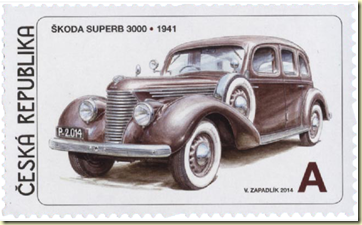
image image

image

Date of Issue : 3 September 2014


Stamp Booklet 

The front page of the booklet features four cars: Škoda Popular 1935, Škoda Popular 1939, Škoda „Tudor“ 1101, 1947 a Škoda Rapid 1937. Located on the back side of the booklet is a short text in the Czech and English language, the designer’s self-portrait, V. Zapadlík’s signature, barcode, the Czech Post´s logo and a security feature, i.e. a hologram with a Czech Post’s motif.
Václav Zapadlík was born in Prague on 23th September 1943. In the 90s, the whole world started taking notice of his art. He cooperated with the Blackhawk Museum, a prestigious car museum, his work is exhibited in San Francisco and in Pebble Beach.

Club News

Bookmarks from  Karnataka Postal Circle.
image


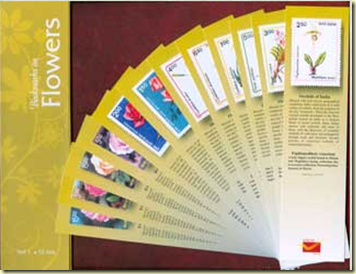
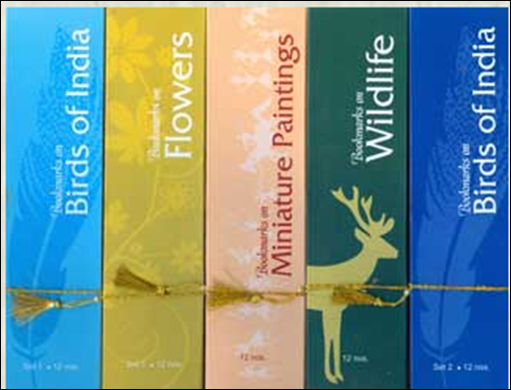
Karnataka Postal Circle has brought out five sets of beautifully made bookmarks, each set containing 12 bookmarks and in all  60 bookmarks. The sets comprises of the themes - Birds of India, Miniature paintings, Flowers and Wildlife. Each Bookmarks are measuring 51 mm x 204 mm (approx.) On each bookmark individual stamp design is imprinted with detailed information about the theme and stamp imprinted on it. Issue date of the stamp is also mentioned on the bookmark.

Each set of 12 bookmarks costs Rs. 35 per set. Cost of 5 Packs (60 bookmarks of 12 each) is available at cost of Rs 175. Bookmarks are available at Post Shoppe , Bangalore GPO. (Contact No. +91-80-22850058)

image image

image image

Courtesy   : Jagannnath Mani – Banglore,  Indian Philately Digest

30 May 2011

Stamps on Viticulture from Luxembourg


 Date of Issue : 17 May 2011

On 17 May 2011 Luxembourg Post issued two stamps on Viticulture.The one features wine bottle and grapes commemorating 100th Anniversary of the ‘Wenzerverband’ and the other commemorates 20th Anniversary of the Cremant de Luxembourg.

image

100th Anniversary of the ‘Wenzerverband’

On 28 May 1911, the district commissioner invited winegrowers to a meeting with the aim of combining all the regional viticultural associations into a single federation. At the time, there were 39 winegrowing associations, of which 30 accepted the invitation. The fundamental objectives of the federation were defined at this constitutional assembly.

They were:- to protect the interests of the profession, that is, to preserve and maintain the interests of viticulture and wine distribution;- to specifically provide continuous up-to-date education and practical training for its members and - to organise the centralised sale and distribution of different viticultural products.

image

20th Anniversary of the Cremant de Luxembourg

Creating a crémant requires constant vigilance, rigorous control and specific know-how, beginning with the vine. The etymology of crémant originates from the word “cream”, which underscores the consistency rather than the vinosity of a festival wine combining fruit, freshness and smoothness.

A crémant is the qualitative pinnacle of a traditional method controlled for a long time, which involves extra effort in the vineyard and a rigorous selection process of grapes and base wines. To produce sparkling wine, one may use any one of the types of vines certified in Luxembourg. The grapes must be very clean, quite ripe and intact until pressed. The “Crémant de Luxembourg” is made from the best types of vines of the Luxembourg Moselle region. Each winegrower chooses his own blends, which results in a great variety of wines and their specific flavours.

Club News

Colorful envelops used by Jabalpur Philatelic Bureau

Now a days Jabalpur (M.P.) Philatelic Bureau is using a beautiful multicolored envelop for sending supply to it's Account holders. It is also thick and durable.

- Sudhir Jain, Satna (MP)

Jbp Bureau Env

Jbp Bureau back

Related Posts with Thumbnails